BUYER GUIDE | OUTDOOR FURNITURE | MALAYSIA
Durability, weather, upkeep and total cost, explained for Malaysian homes and businesses. Updated October 2026.
Quick answer: Teak suits full-sun spaces and buyers who accept a silver-grey finish. Balau suits shaded, heavy-use spaces where density and a darker tone matter more. Neither wood is better everywhere. The right choice depends on sun exposure, how often the piece gets moved, and how much oiling you will realistically do.
Your supplier quotes a balau dining set at a noticeably lower price than the teak one beside it. Both look solid. Both are tropical hardwoods. So which one survives a hot Shah Alam afternoon, heavy evening storms and months of humidity?
Balau wood vs teak for outdoor furniture in Malaysia is a closer call than most sellers admit. The answer depends on where the piece sits, how much upkeep you will actually do, and whether you mind the colour changing. This guide shows where each wood wins, where it fails, and the one question that settles most purchases.
What Balau and Teak Actually Are
Teak is Tectona grandis, a single species with a long record in furniture and boatbuilding. Balau is a trade name rather than a species. It covers several dense hardwoods from the Shorea genus, which grow across Malaysia and Indonesia and are widely used for decking, flooring and outdoor structures.
That difference matters more than most buyers expect. Two balau pieces can behave differently depending on species, density and how well the timber was dried. Teak is more uniform because it is one species, though grade and sourcing still vary.
Sourcing is the first thing we explain to buyers. As of October 2026, our wooden pieces, including teak and balau, are supplied through Indonesian partners rather than made in our Shah Alam workshop. Our metal frames, in powder-coated aluminium, stainless steel and mild steel, are made in-house. For any wood piece, ask for the species name and the moisture content. The checklist later in this guide covers both.
How Each Wood Handles Malaysian Weather
In Malaysia, the wood that struggles most is the one that stays damp and dries unevenly, not the one that gets hottest.
Rain, humidity and mould
Teak carries natural oils that help it resist water and insects, which is why it has lasted in boats and garden furniture for generations. Balau is durable against decay in most grades, but it depends more on its finish and on being properly dried.
Mould shows up as dark staining and tends to start where water sits. Check the underside of a table and the joints first, because that is where a problem usually begins.
Sun, heat and surface checking
Balau is denser and heavier than teak. That helps it resist dents and scuffs from chairs dragged across tiles. Its silica content is hard on cutting tools, so it is a harder wood to work and finish.
In full sun, a poorly dried balau piece can develop surface checks, which are small cracks running along the grain. Teak moves less in the sun. It greys as its surface weathers, and that is a change in colour, not rot.
Balau vs Teak at a Glance
Read the table as a set of trade-offs, not a scorecard. Neither wood wins every row.
| Factor | Teak | Balau |
|---|---|---|
| Botanical source | Tectona grandis | Shorea species, sold under the trade name balau |
| Natural oil content | High, which aids moisture and insect resistance | Lower reliance on oil; protection leans on the finish and drying |
| Density and weight | Lighter | Denser and heavier |
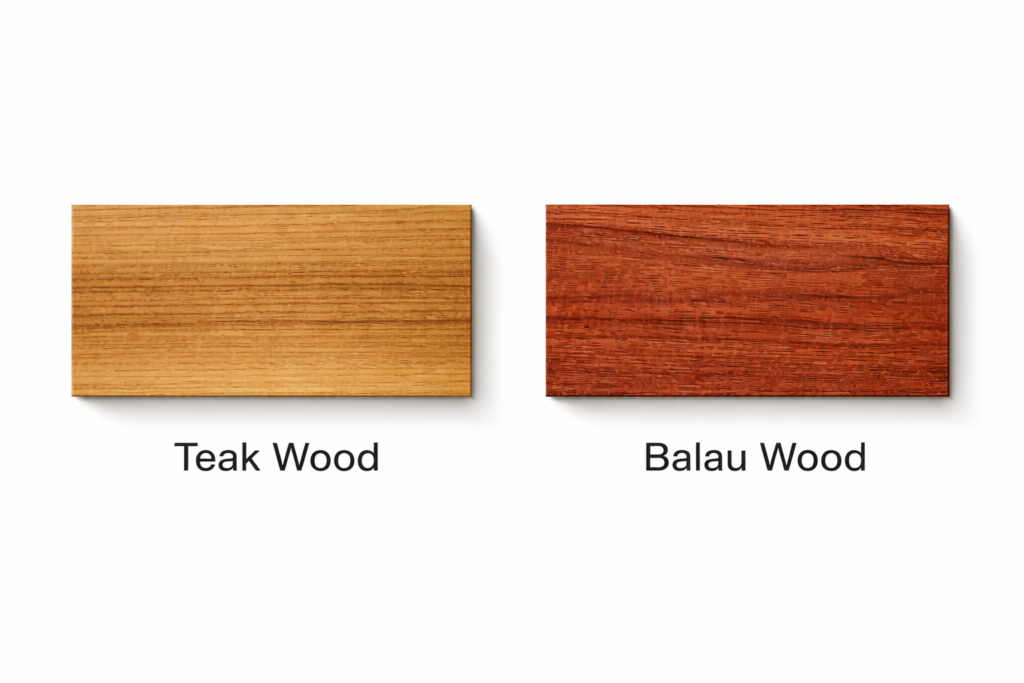
| Colour change outdoors | Silver-grey if left untreated | Darkens to warm brown or grey-brown |
| Surface checking risk | Low to moderate | Higher if the timber was dried poorly |
| Upkeep in full sun | Oil about twice a year, or let it grey | Clean, check the finish, inspect ends and joints |
| Ease of working | Easier | Harder on tools |
| Typical price position | Often higher | Often lower; varies by grade and supplier |
| Best fit | Full-sun terraces; buyers who like the grey finish | Shaded, heavy-use areas; buyers who want a dense, darker tone |
Which Wood Fits Your Space?
For full sun, teak is the better choice in most cases. For shade and heavy use, balau often gives better value. The two subsections below explain why.
Full-sun balcony or rooftop terrace
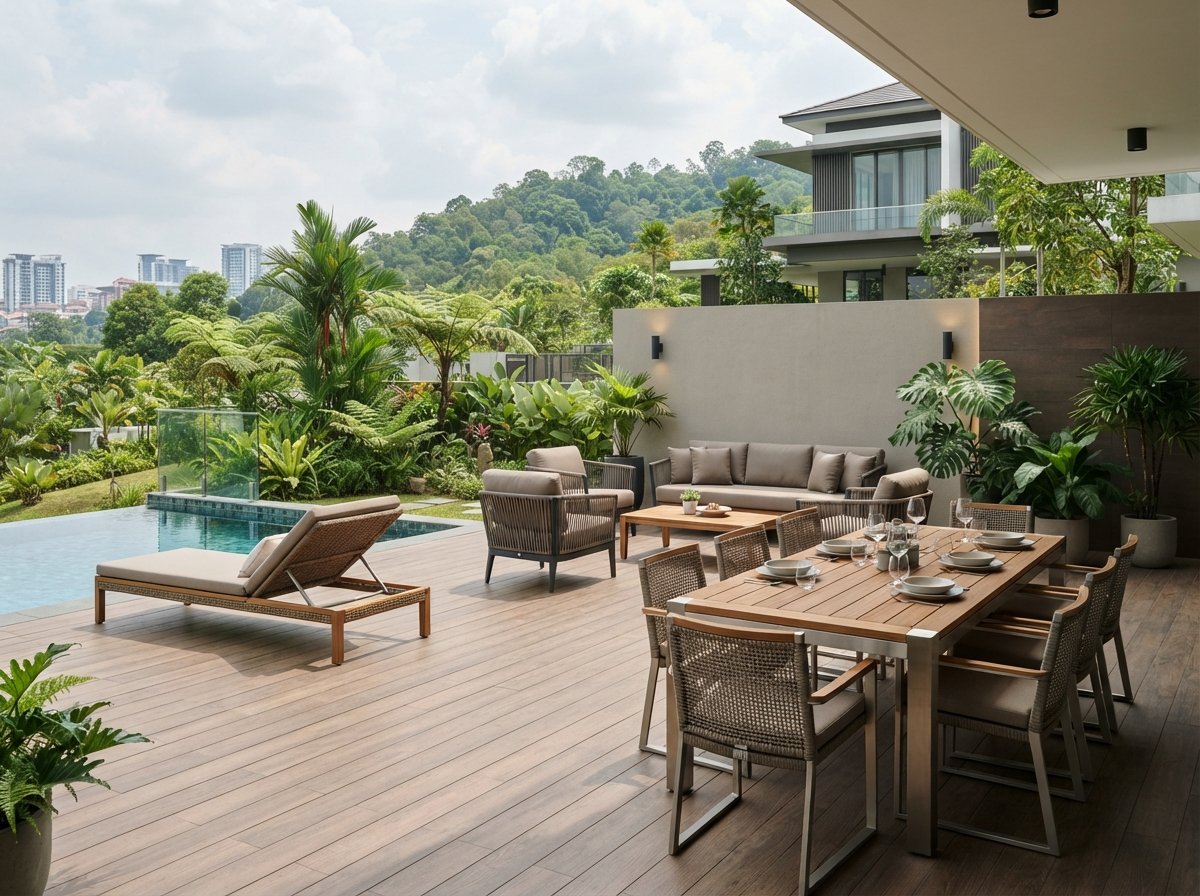
A rooftop in Subang or a condo balcony that catches the afternoon sun is teak territory. The silver-grey finish suits many buyers, and the greying does not weaken the wood. If you want the warm colour to last, plan to oil it twice a year. That is manageable, but not optional.
Shaded garden, covered porch or busy commercial space
A covered terrace in Shah Alam, or a café patio where chairs get moved every day, favours balau’s density. It handles knocks well and suits shaded settings, where its darker tone looks deliberate. You still need a good finish and a periodic check on the joints.
Pros and cons
| Teak | Balau |
|---|---|
| Pros: natural oils; stable in sun; graceful grey finish; familiar to most buyers | Pros: dense and hard wearing; often lower price for a similar size; suits shaded and busy spaces |
| Cons: often higher price; colour changes if you do not oil it; needs regular care to hold its tone | Cons: harder to work and finish; can check in sun if poorly dried; heavier to move; weathers unevenly |
The Checklist Before You Buy
- Ask for the species name in writing. The word balau on its own tells you very little.
- Ask for the moisture content and whether the timber was kiln-dried.
- Check the end grain and joints. Cracks there often become failures later.
- Ask which finish is applied and how to maintain it.
- Confirm the warranty, and whether it covers wood and metal parts the same way.
- Note exactly where the piece will sit, then match it to the sun and shade guidance above.
Save this list before you visit a showroom or request a quote.
What It Costs Over Five Years, Not on Day One
The quote is only the first number. Maintenance time, refinishing and replacement drive the real cost, and they change with the size of the space.
| Scenario | Typical setup | What drives the cost | Where balau tends to win | Where teak tends to win |
|---|---|---|---|---|
| Home balcony | One six-seat dining set in full sun | Oiling time, colour preference | Lower upfront price if you accept some darkening | Less upkeep if you like the grey look |
| Café or restaurant patio | 20 or more chairs, moved daily | Knocks, replacement cycle | Dent resistance; fewer visibly damaged chairs | Easier to justify when the grey look is part of the brand |
| Hotel or resort pool deck | Loungers and tables in full sun, high traffic | Downtime for refinishing | Heavy use under cover | Full-sun loungers where a uniform grey finish is the design |
Prices change with grade, size and supply. Check current figures on samzdesign.com or request a quote before you set a budget.
When the Popular Advice Fails
The popular advice is to choose the harder wood. That fails in three situations.
- “Pick the densest wood for the longest life.” This fails when the set gets rearranged every week on a balcony. Weight becomes the problem, and a lighter teak set gets used and moved more easily.
- “Pick the cheapest wood.” This fails when a poorly dried piece checks within its first hot, dry spell. Repair or replacement can wipe out the saving.
- “Wood decides everything.” This fails in sheltered spaces with weak joinery. A well-jointed teak chair under a roof can outlast a badly finished balau one.
If you like the look of wood but want fewer trade-offs, consider a powder-coated aluminium frame with wooden or rope seating. The frame does not face the wood moisture question at all. Our powder-coated aluminium range is made in our Shah Alam workshop.
Mistakes That Shorten Outdoor Wood Life
- Leaving pieces standing in water after rain. Tip them or move them under cover.
- Oiling at midday in full sun. The surface is hot and the oil dries unevenly. Oil in shade, after cleaning and drying the surface.
- Pressure-washing against the grain. This lifts the fibres and speeds up greying.
- Setting wood directly on wet concrete or tiles with no airflow underneath.
- Buying without a moisture certificate, then discovering checks in the first hot, dry spell.
Frequently Asked Questions
Neither wins everywhere. Teak suits full-sun terraces and owners who like a silver-grey finish. Balau suits shaded, heavy-use spaces where density matters and a darker tone is fine. If you cannot oil regularly, lean towards the wood you can keep clean and dry. Check sun exposure first, then the maintenance you will realistically do.
Both can last many years outdoors when they are properly dried, finished and kept off standing water. Lifespan depends more on moisture content, joinery and finish than on the name alone. Ask your supplier for the species name and a moisture certificate. If a seller cannot provide either, treat any lifespan claim as unverified.
Price depends on species, grade, timber size and supply, so there is no single rule. Teak often costs more because of its long reputation and steady demand. Balau prices vary widely by species and grade. Prices change over time, so check current figures on samzdesign.com or request a quote before you budget.
Not normally. Balau darkens with sun and weather, usually to a warm brown or grey-brown. Damp patches and mould can look almost black, which is why cleaning and drying matter. Regular cleaning keeps the colour even, and a suitable outdoor finish slows the change. Ask your supplier which finish suits the wood you are buying.
Only if you want to keep its warm colour. Oil slows the grey change but does not stop it. For a full-sun piece, oiling about twice a year is a sensible starting point. Under cover, once a year is usually enough. Clean and dry the surface first, and oil in the shade rather than at midday.
Yes, with a few precautions. Keep pieces off standing water, move them under cover during heavy storms and check that the balcony drains properly. Measure the space and leave clear walkways so the furniture does not block exits. If you are unsure about weight or fixings, confirm with your building management before delivery.
Where This Leaves You
Balau and teak are both serious outdoor hardwoods. Teak is the safer pick for full sun and for buyers who want a natural grey finish. Balau is the stronger choice for shaded, high-traffic spaces where density and a darker tone matter more than colour stability. The better question is not which wood is better. It is which trade-off you can live with for the next five years.
If you are close to deciding, write down three things: how much sun the piece gets, how often it will be moved, and whether you will oil it. Those answers usually settle it. When you are ready to compare pieces, browse our wooden outdoor dining sets, or send us your space details and our team will reply within 24 hours.
Choose the wood for the weather you have, not the one in the brochure.