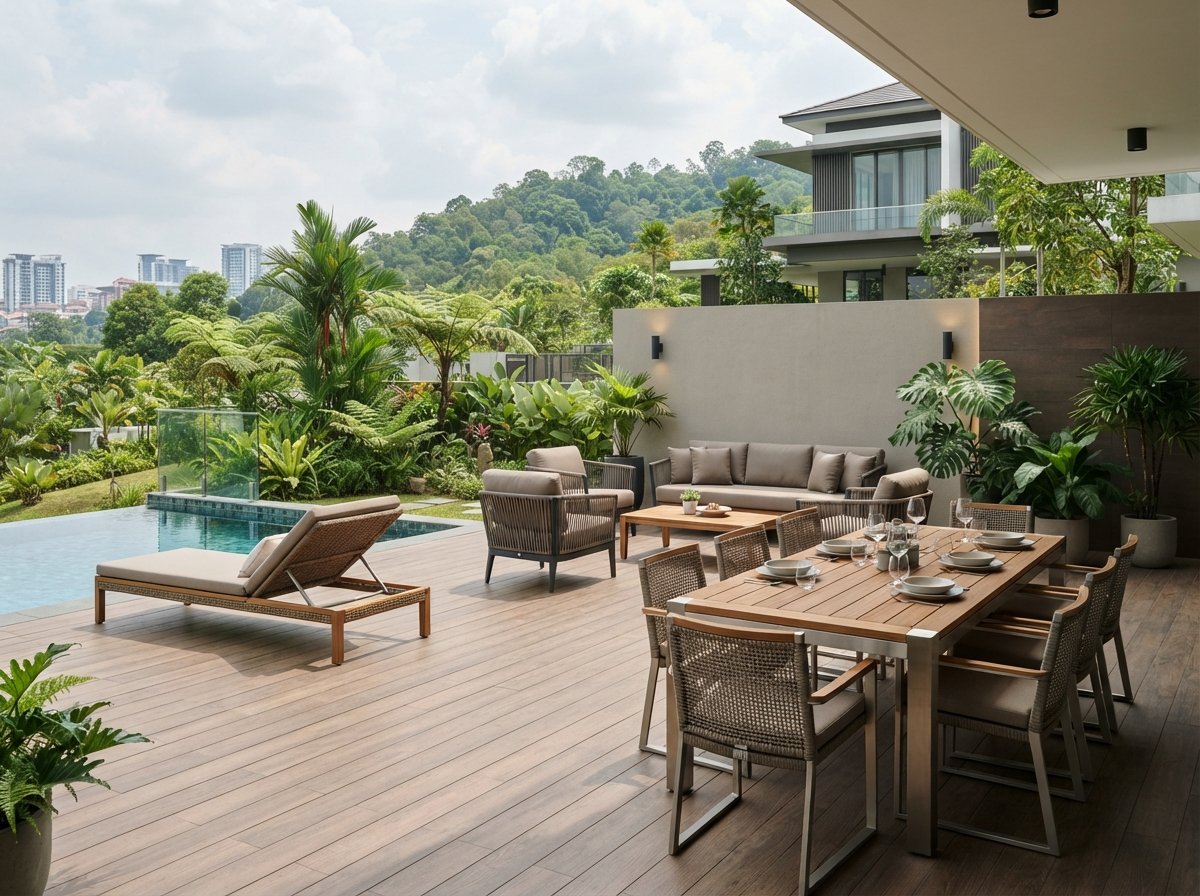
A boutique resort in Langkawi lost 14 of its 30 poolside loungers in 18 months. Not to theft. To chlorine, salt in the air, and a coating thin enough that the first rust spots showed by month six. The replacement bill came in at nearly RM 42,000, more than the original set cost. Pool furniture in Malaysia has to survive a punishing combination: chlorine daily, UV at the equator, humidity in the 80s, and monsoon rain that soaks everything from November through March. Most of what sells as “poolside” in Malaysian retail was never engineered for any of this. If you are kitting out a home pool, a condominium pool deck, a boutique hotel, or a full resort, the only question that matters is which materials, which construction, and which frame specifications will still be standing in year ten.
What poolside furniture in Malaysia has to survive
Poolside furniture dies faster than any other outdoor furniture in Malaysia because it faces four stressors at once. Chlorinated or saline water splashes onto frames and soaks into cushion covers every day. The Malaysian Meteorological Department reports mean relative humidity between 80 and 88 percent across Peninsular Malaysia year round, so even when it is not raining, nothing really dries. Equatorial UV breaks down low grade plastics and polyester in 18 to 24 months. And during the monsoon months, pool furniture sits in standing water for days at a time.
The failure test for any poolside piece is simple. Can the frame material handle direct chlorine contact without pitting? Can the cushion foam dry out between splashes without holding mould? Can the fabric take six hours of midday sun five days a week for ten years? If any one answer is no, the piece belongs on a covered balcony, not a pool deck.
The materials that actually work by the pool
Only a short list of materials survives Malaysian poolside conditions for a full decade. Everything else is a short-term buy.
Powder coated aluminium frames
Powder coated aluminium is the backbone of commercial poolside furniture because aluminium does not rust. It forms a thin oxide layer that protects the metal beneath, and chlorine does not break that layer the way it breaks the powder coat on steel. The quality difference between a lounger that lasts 5 years and one that lasts 15 is almost entirely the powder coat. Marine-grade 6061 or 6063 extrusion with chromate pre-treatment and a 70 to 90 micron polyester powder coat applied in two layers is what commercial specification looks like. Our powder coated aluminium pieces are fabricated in our Shah Alam workshop, which lets us control the pre-treatment and coating thickness directly.
Grade A teak
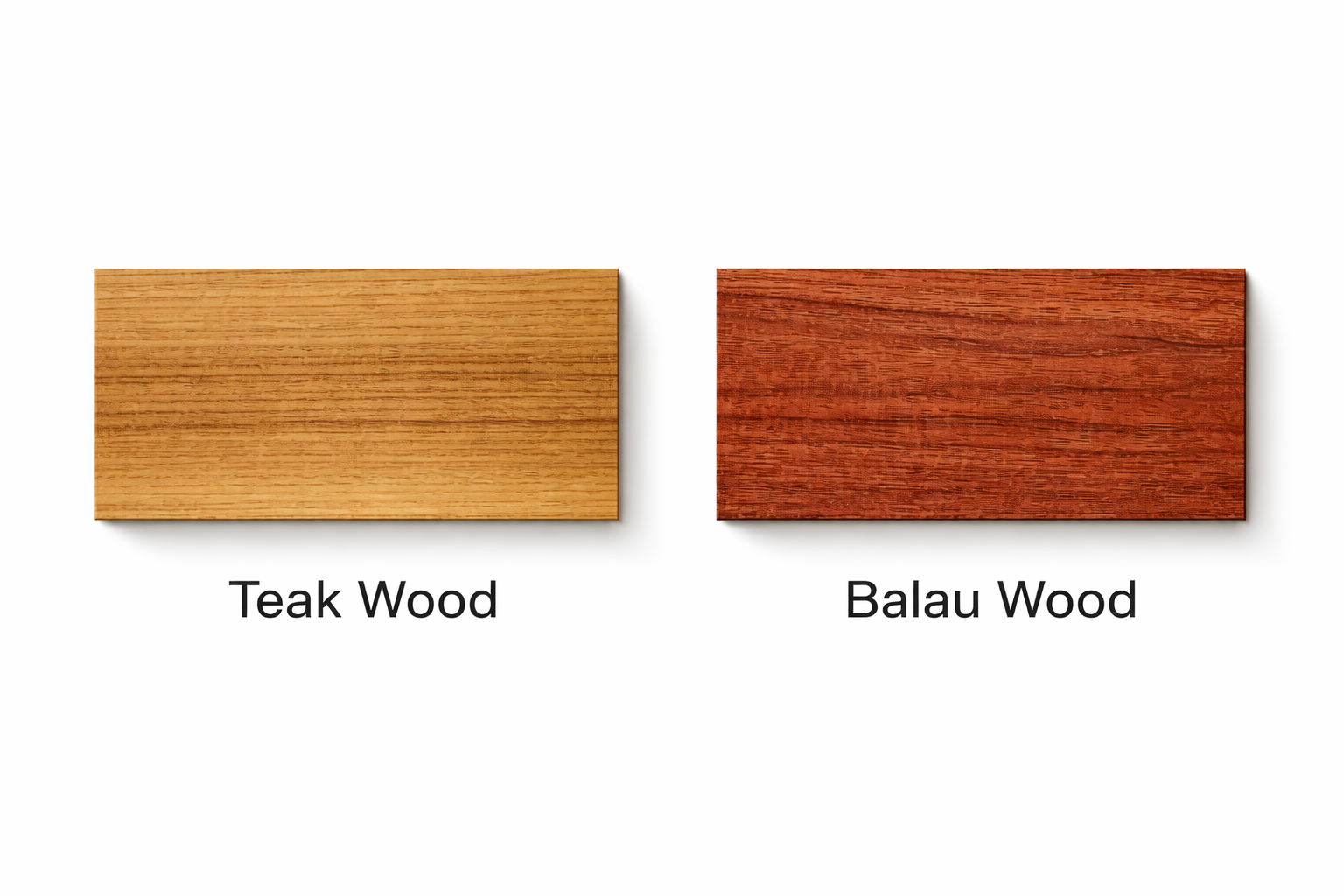
Teak is still the premium answer for private pool decks and high-end resorts where the design brief calls for warmth rather than modern metal. Grade A Indonesian teak contains natural tectoquinones that resist water, chlorine splash, and insects. Lifespan on a pool deck is 20 to 30 years with minimal care, which is longer than most hotels keep a design concept. The teak and hardwood we build with are sourced from long standing partners in Indonesia.
Olefin rope on aluminium frames
Olefin rope has become the fastest-growing material in Malaysian hospitality design since 2024. The look is soft, modern, and photographs well, which matters for boutique hotels and condominium facilities marketing lifestyle images. Olefin fibre is UV stable, holds colour for 7 to 10 years, and sheds pool water fast. Our rope furniture collection uses olefin on marine-grade aluminium because the two together give you the look of rattan with the lifespan of a commercial piece.
Viro wicker on aluminium
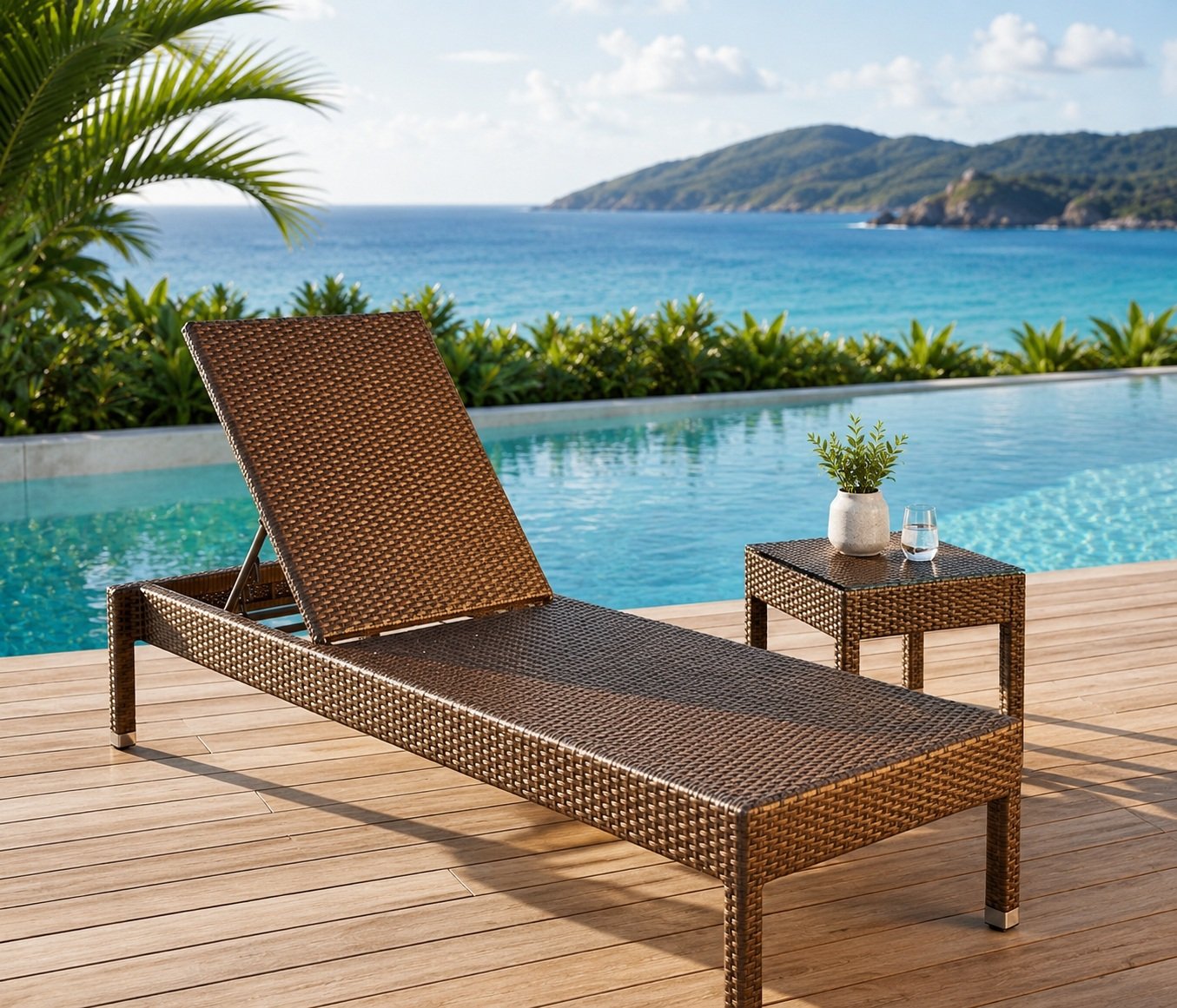
Viro synthetic wicker is the woven look most buyers associate with resort furniture, and when it is applied over powder coated aluminium it holds up to pool environments for 8 to 12 years. Natural rattan collapses in 2 to 3 years outdoors here, so this is the only wicker that belongs on a pool deck.
The furniture types every pool deck needs
Pool deck planning starts with how the space will be used, not the catalogue. A home pool for a family of five needs a different mix from a 60-room resort pool.
Sun loungers (the core)
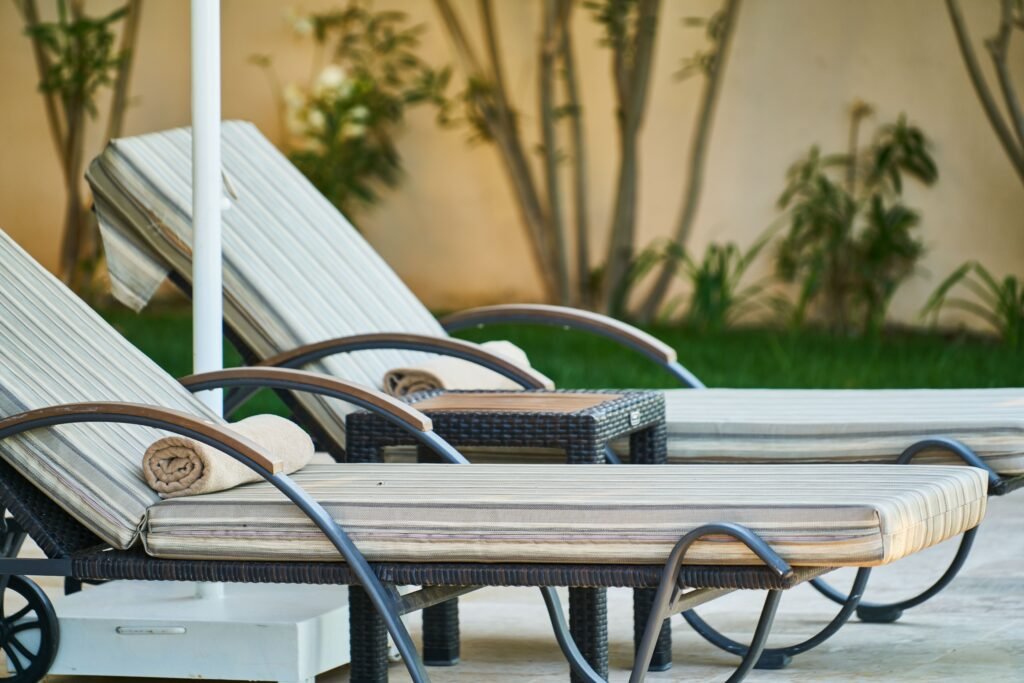
Every pool deck needs loungers. Count on one lounger per guest or household member at a minimum, with a 20 to 30 percent buffer for shared spaces. Our sun lounger and daybed range covers the three variants most buyers end up choosing between: full-length teak loungers (classic resort look), aluminium stackable loungers (easiest for daily deck cleaning), and olefin rope loungers (modern boutique aesthetic). All three can take direct sun and splash.

Daybeds and cabanas
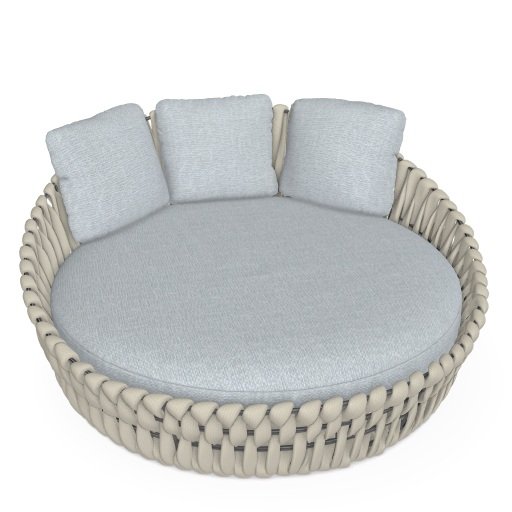
Daybeds are the premium add-on, and they signal “resort” to guests even in a small facility. For homes, one or two daybeds in a shaded corner change how the whole pool area feels. Our outdoor cabana range includes both open daybeds and roofed cabanas, which solve the Malaysian midday sun problem that pure loungers do not.
Side tables, umbrellas and dining
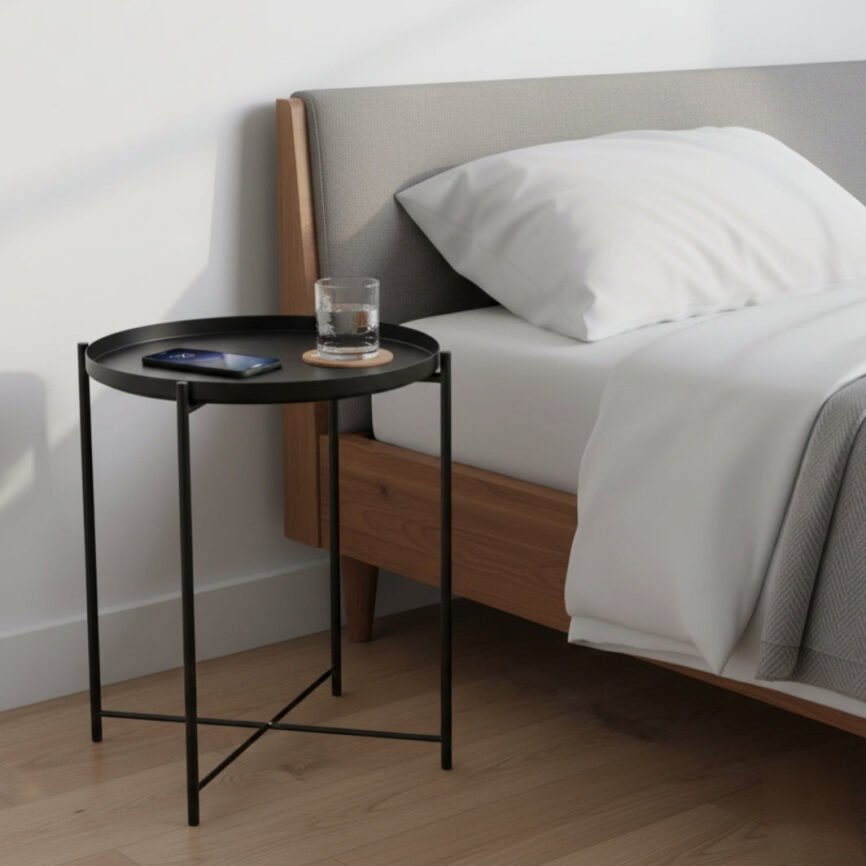
Side tables between loungers for drinks and phones. Umbrellas or sail shades for midday cover (the sun from 11 am to 3 pm is too strong for most guests to enjoy without shade). A compact dining or bistro set near the pool for food and drink service. These are not optional for commercial pool decks, and they are the pieces that most home buyers forget to budget for.
Homeowner versus hotel: what each actually needs
The common mistake is treating poolside furniture as one category. A home pool and a hotel pool have different problems to solve.
Homeowner pool decks
A home pool deck typically needs 2 to 6 loungers, one or two side tables, a daybed or cabana if the space allows, and an umbrella. The investment horizon is 10 to 15 years because owners keep good furniture. Prioritise aesthetic that fits the home’s architecture (teak reads warm, aluminium reads modern, rope reads coastal boutique). Comfort matters more than stackability. Cushions can be stored indoors during the worst monsoon weeks, which is why upholstered loungers work for homes but struggle in hotels.
Hotel and resort pool decks
Hospitality pool decks need volume, uniformity, stackability for daily cleaning, and furniture that looks presentable even when 60 guests have been using it for six hours. The investment horizon is often 7 to 10 years before a refurbishment. Prioritise materials that need no daily maintenance (teak and aluminium both qualify), stackable or ganged loungers for staff efficiency, cushions with quick-dry foam and removable covers, and warranties in writing. Hotels buying from importers rarely get written warranties, which is why specifying with a local manufacturer matters.
The comparison table every pool buyer should see
| Material | Chlorine resistance | UV / colour hold | Monsoon tolerance | Lifespan on a pool deck | Best for |
|---|---|---|---|---|---|
| Powder coated aluminium (marine grade) | Excellent | Excellent (10+ years) | Excellent | 10 to 20 years | Hotels, resorts, condos, modern homes |
| Grade A teak | Excellent | Silvers naturally, structure sound | Excellent | 20 to 30 years | Premium homes, high-end resorts |
| Olefin rope on aluminium | Excellent | Excellent (7 to 10 years) | Excellent | 7 to 10 years | Boutique hotels, lifestyle brands |
| Viro wicker on aluminium | Very good | Good (8 to 12 years) | Very good | 8 to 12 years | Resort look, mixed-use decks |
| Stainless steel 316 | Excellent | N/A (metal) | Excellent | 15+ years | Niche designer pieces, high cost |
| Powder coated mild steel | Poor (coating fails) | Fair | Poor | 2 to 5 years | Not recommended for pools |
| Natural rattan | Poor | Poor | Poor | 1 to 2 years | Never specify for poolside |
| Plastic resin (budget) | Fair | Poor (18 months) | Fair | 2 to 4 years | Short-term use only |
Pricing moves with raw material and the exchange rate, so verify current pricing before you build a project quote.
Common mistakes that cost buyers money
Over the last five years we have watched the same four mistakes play out across homeowners, condominium management, and hotel procurement teams.
- Buying by look rather than material. A rope lounger that photographs beautifully in a Mediterranean brochure may be polyester rope, not olefin, and polyester fades by year three in Malaysian sun.
- Choosing steel because it is cheaper. Steel frames rust around the welds within 24 months at any Malaysian pool. The savings vanish the first time a guest cuts their leg on exposed metal.
- Specifying soft cushions without quick-dry foam. Standard outdoor foam holds water for days in humidity above 80 percent, and the cushion smells before the end of the season.
- Skipping covers and storage planning. Even the best outdoor furniture needs seasonal protection during the November to March monsoon. Hotels that build a storage room into pool deck planning save on replacement costs for twenty years.
How to specify contract-grade poolside furniture for a hotel
If you are a hotelier, condominium manager, or developer sourcing for a project, this is the specification checklist to send to any supplier.
- Frame material: marine-grade 6061 or 6063 aluminium, minimum 1.5 mm wall thickness, chromate pre-treatment, 70 micron polyester powder coat minimum
- Rope or wicker: olefin or UV-stabilised HDPE, manufacturer name confirmed in writing
- Cushion foam: quick-dry reticulated foam, density minimum 32 kg per cubic metre
- Cushion fabric: 100 percent solution-dyed acrylic (Sunbrella, Agora or equivalent) with 1500 hour minimum UV rating
- Stackability: minimum 6-high for commercial loungers, with protective pads between frames
- Warranty: 3 years minimum on frame, 1 year minimum on cushion
- Delivery and installation: itemised, with lead time in writing
- Replacement parts policy: confirmed in writing before order
- Site measurement: supplier conducts measurement, not estimate from drawings
Any supplier that cannot answer all nine points on paper is not a contract-grade supplier. Our B2B and project fabrication service handles each of these as standard, with written specification before any production run.
Pros and cons at a glance
Powder coated aluminium
Pros: No rust, chlorine resistant, stackable, modern aesthetic, long lifespan.
Cons: Can get hot in direct midday sun, quality depends entirely on the coating process.
Teak
Pros: Longest lifespan of any material, premium aesthetic, zero maintenance if you accept silvered colour.
Cons: Highest upfront investment, heavier than aluminium so less practical for high-stackability needs.
Olefin rope on aluminium
Pros: Soft modern look, fast-drying, excellent for lifestyle brand aesthetics.
Cons: 7 to 10 year lifespan is shorter than teak or aluminium, rope quality varies between suppliers.
Viro wicker on aluminium
Pros: Resort aesthetic without the fragility of natural rattan, good 8 to 12 year lifespan.
Cons: More maintenance than solid aluminium, slightly higher initial cost.
Conclusion
The materials that survive Malaysian pool decks for a decade or more are a short list: marine-grade powder coated aluminium, Grade A Indonesian teak, olefin rope on aluminium frames, and Viro wicker on aluminium. Everything else is either a short-term buy or a replacement bill waiting to arrive. For homes, pick the material that fits the architecture and the lifestyle. For hotels and projects, specify with the nine-point checklist above and insist on written answers from any supplier before you order. Pool furniture that fails early costs twice: the replacement, and the guest experience lost in between. Match the material to the exposure properly the first time and the furniture pays itself back many times over.
Frequently Asked Questions
Marine-grade powder coated aluminium is the most reliable all-rounder for Malaysian pool decks because it resists chlorine, salt and monsoon rain for 10 to 20 years. Grade A Indonesian teak is the premium alternative with a 20 to 30 year lifespan. For a modern boutique look, olefin rope on aluminium frames gives 7 to 10 years with the softest aesthetic. Steel and natural rattan should never be specified for pools.
It depends entirely on the material. Powder coated aluminium lasts 10 to 20 years, Grade A teak 20 to 30 years, olefin rope on aluminium 7 to 10 years, and Viro wicker 8 to 12 years. Standard steel loungers typically fail within 2 to 5 years because chlorine attacks the welds, and natural rattan rarely lasts a single season outdoors.
Chlorine attacks steel and most low-grade metals aggressively, pitting the surface and rusting welds within months. It does not damage aluminium, teak, olefin rope, Viro wicker, or stainless steel 316. If your pool uses saline treatment instead of chlorine, salt resistance becomes the priority, and the same shortlist applies: aluminium and teak lead, steel fails fastest.
Commercial-grade pool loungers typically range from RM 1,200 to RM 4,500 per lounger depending on material, frame specification, and cushion inclusion. Hotels buying in volume (30+ units) can negotiate contract pricing, especially when sourcing from a Malaysian manufacturer directly rather than through an importer. Check current pricing on our sun lounger and daybed range before building a project quote.
At a minimum: sun loungers (one per guest plus 20 to 30 percent buffer), side tables between loungers, umbrellas or sail shades for midday sun, and a storage plan for the monsoon season. Premium pool decks add daybeds, cabanas, poolside dining or bistro sets, and a food and beverage service station. The cost difference between minimum and premium is often less than 25 percent over 10 years.
No. Indoor furniture frames rust within months in chlorine humidity, indoor cushion foam holds water and grows mould within weeks, and indoor fabrics fade in Malaysian UV within one dry season. Even covered pool areas have enough chlorine air and humidity to kill indoor furniture fast. Always specify outdoor-rated or marine-grade materials for anything within 5 metres of a pool.
Standard pool loungers in stock can ship in 1 to 2 weeks within the Klang Valley. Custom specifications, bulk hotel orders of 30 units or more, or made-to-measure cabanas typically take 6 to 10 weeks from order to delivery, with site measurement, written specification, production, and installation included. Project orders through our B2B service follow an agreed schedule from the start.
Covering is optional for aluminium and teak, essential for upholstered cushions, and strongly recommended for Viro wicker and rope furniture during the worst storm weeks. Trapped moisture under a cover causes more damage than open-air rain for aluminium and teak frames, so loose covers that allow airflow are better than tight waterproof wraps. Cushions should move to covered storage during the November to March monsoon.