Specifying Commercial Outdoor Furniture in Malaysia: What Cafes, Restaurants and Hotels Should Get Right Before Ordering
A cafe owner in Petaling Jaya fits out a 40-seat terrace with chairs that looked great in the supplier’s showroom. By month eight, the powder coat is bubbling at the welds, two chairs have cracked at the back joint, and the cushions smell of mildew after every monsoon week. None of that is bad luck. It’s a specification problem.
Commercial outdoor furniture in Malaysia has to survive things residential pieces never face: 12 to 16 hours of daily use, staff dragging chairs across tiles, 80% plus humidity, and heavy afternoon rain for months at a time. Pick on looks and price alone and you’ll pay twice. What follows is a working spec guide covering materials, load ratings, finishes, real costs and supplier questions, so your first order is the one that lasts.
What Makes Outdoor Furniture “Commercial Grade”?
Commercial-grade outdoor furniture is furniture built and tested for continuous public use, not occasional home use. The difference sits in frame thickness, joint construction, finish quality and how the piece is tested, not in how it looks.
A residential dining chair might see 300 sittings a year. A busy cafe chair in Bangsar or Shah Alam can see 3,000 or more. That tenfold jump changes everything about how the chair should be built.
The testing standards worth asking about
EN 581 is the European standard for outdoor seating and tables, covering safety, strength and durability for both domestic and contract use. ANSI/BIFMA X5.4 is the American standard for lounge and public seating. Most Malaysian suppliers won’t hand you a certificate, and that’s fine for many projects, but a serious manufacturer should be able to tell you what load the frame is rated for and how they test it.
A simple rule we apply: if a supplier can’t tell you the static load rating of a chair, they haven’t tested it.
Commercial vs residential: the key differences
| Spec point | Residential grade | Commercial grade |
|---|---|---|
| Aluminium wall thickness | 1.0 to 1.2 mm | 1.5 to 2.0 mm (or more for load points) |
| Joint construction | Bolted or spot welded | Fully welded, ground and sealed |
| Powder coating | Single coat, no pre-treatment spec | Pre-treated (chromate-free), outdoor polyester powder, 60 to 80microns |
| Hardware | Zinc-plated steel | 304 or 316 stainless steel |
| Teak grade | Mixed or B grade | A grade heartwood, kiln dried |
| Fabric | Polyester or printed canvas | Solution-dyed acrylic (e.g. Sunbrella) or PVC-coated mesh(e.g. Batyline) |
| Expected life (outdoors, Malaysia) | 2 to 4 years | 7 to 15 years with maintenance |
Figures are typical industry ranges, not guarantees. Ask your supplier for their actual specs.
Which Material Works Best for Each Type of Venue?
There’s no single best material for commercial outdoor furniture in Malaysia. Aluminium suits high-turnover cafes, teak suits premium hotels and resorts, and synthetic rattan or rope suits lounge zones where comfort and look matter more than stacking.
The right answer depends on how often furniture is moved, how exposed the area is, and what the brand is trying to say.
Powder-coated aluminium: the workhorse
Aluminium is light, doesn’t rust, and handles daily stacking and moving. For a restaurant that clears its terrace every night, it’s the most practical choice. Samz Design fabricates its aluminium frames in its own workshop in Shah Alam, which matters for commercial buyers because it allows custom heights, colours and frame thicknesses without waiting on an overseas factory.
The weak point is the finish. Poor pre-treatment is the main reason powder coat peels in Malaysian coastal areas such as Port Dickson, Penang and Langkawi. Ask for a salt-spray test result or a Qualicoat-type outdoor powder spec.
Indonesian teak: the long-life premium option
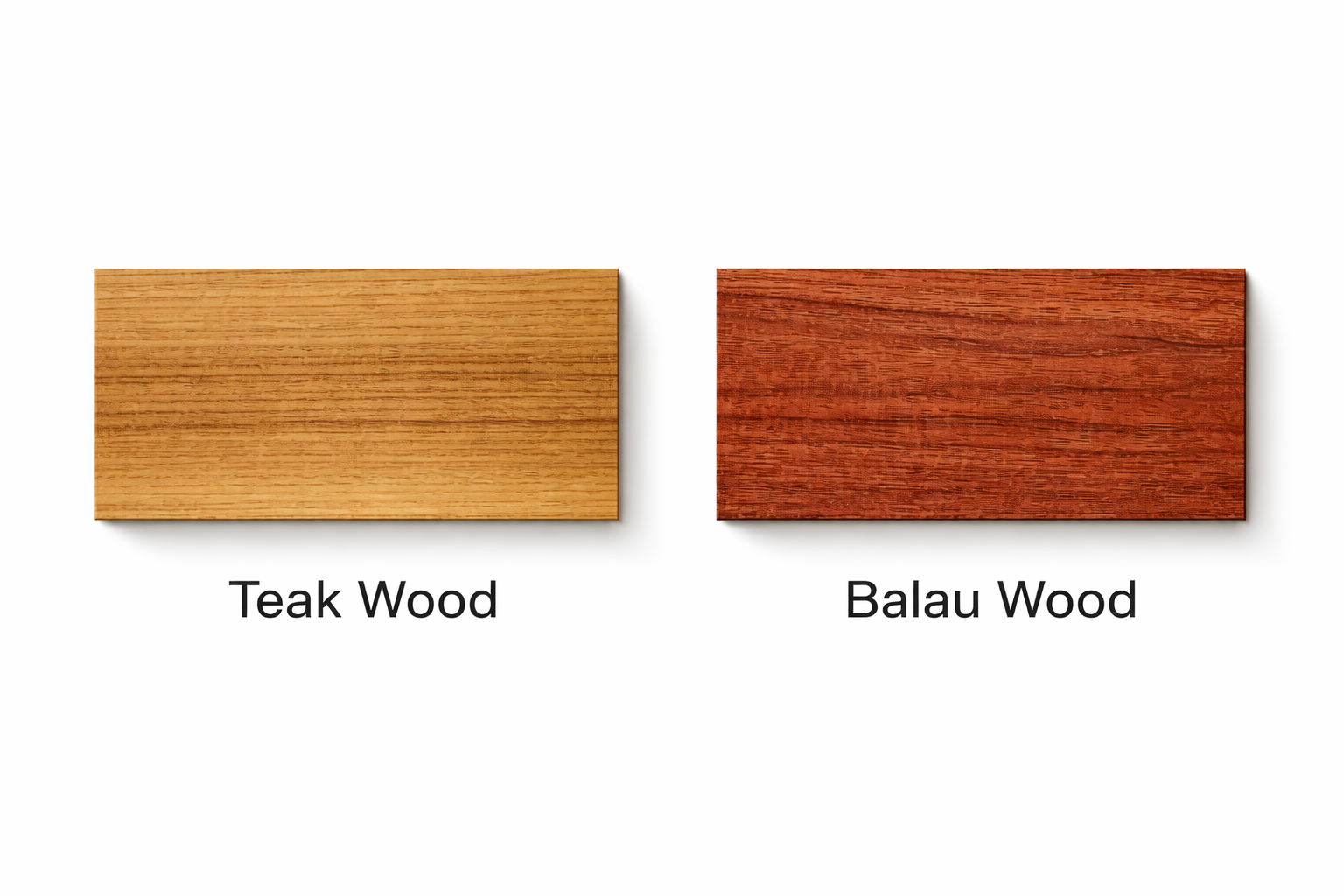
Teak (Tectona grandis) contains natural oils and silica that make it resistant to rot, insects and water. Samz Design sources its teak from Indonesia, where plantation teak managed by Perhutani is the main legal supply. For a resort deck or hotel restaurant, A grade teak can outlast three sets of cheaper furniture.
The trade-off is weight and upkeep. Teak chairs don’t stack well, and staff won’t enjoy moving them nightly. Teak also weathers to a silver-grey within 6 to 12 months unless it’s oiled or sealed, and some hotel owners see that as a defect when it’s actually normal.
Synthetic rattan, wicker and rope: the comfort layer
HDPE synthetic rattan and outdoor rope are woven over an aluminium frame. They look warm, feel softer, and photograph well, which is why rooftop bars and resort lounges use them. Cheaper PE weaves go brittle and fade under UV within two years, so ask specifically for UV-stabilised HDPE.
Material comparison by venue
| Venue type | Best primary material | Why | Watch out for |
|---|---|---|---|
| High-turnover cafe or kopitiam terrace | Powder-coated aluminium | Light, stackable, easy to clean | Cheap coating at welds |
| Mid-range restaurant | Aluminium frame + teak or HPL top | Balance of durability and warmth | Table base stability on uneven tiles |
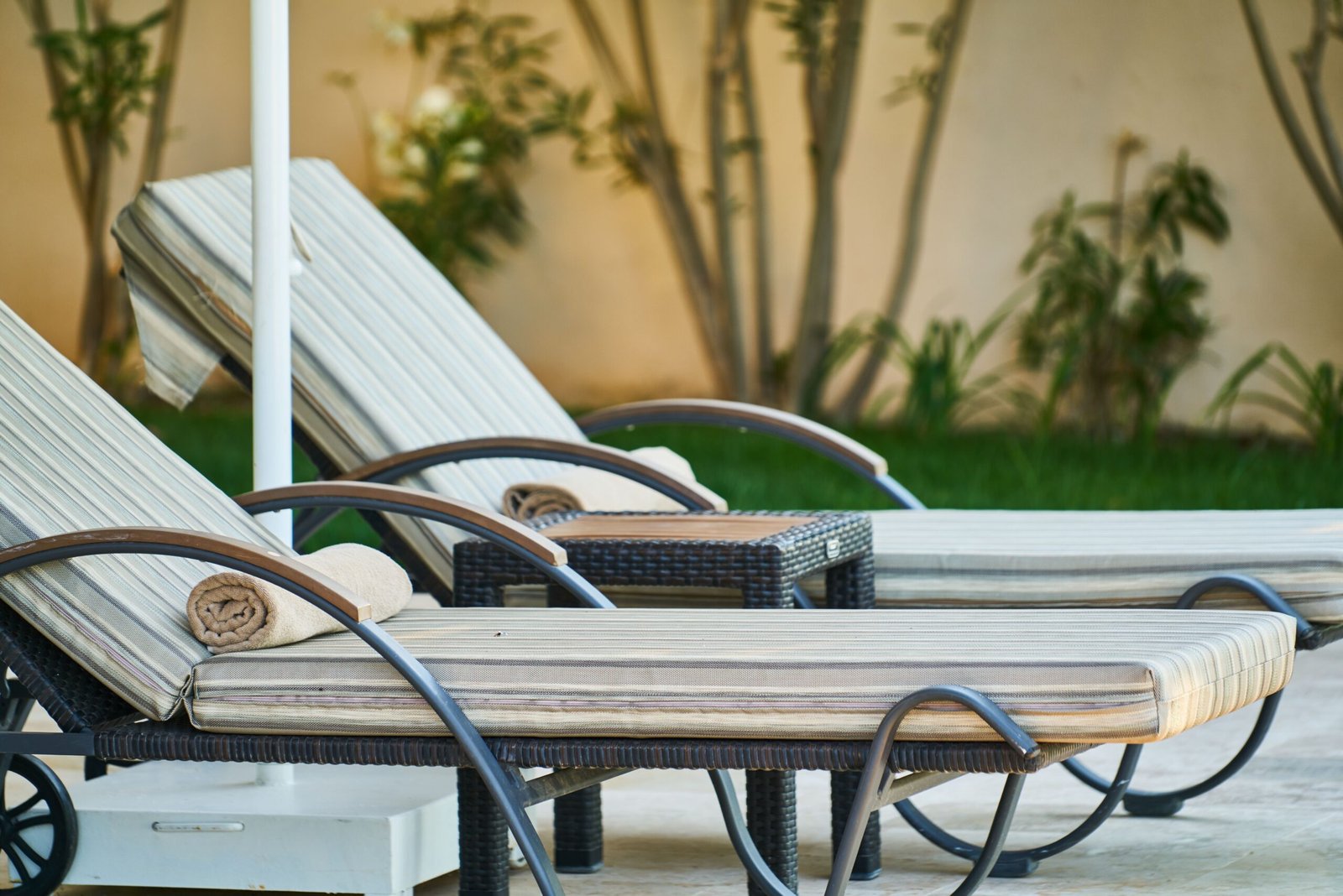
| Hotel pool deck | Teak or aluminium with sling fabric | Fast drying, chlorine resistant | Cushions left out overnight |
| Resort or beach club | A grade teak, 316 stainless fittings | Salt air resistance, premium look | Weight, oiling schedule |
| Rooftop bar or lounge | Aluminium + rope or HDPE rattan | Comfort, visual appeal, low weight | Wind exposure on high floors |
What Does Commercial Outdoor Furniture Really Cost You?
The real cost of commercial outdoor furniture isn’t the price on the quote. It’s how often you replace it, how much staff time it takes, and how it makes your venue look in year three.
Cheap imported chairs often look like a saving on day one. In Malaysian sun and rain, many need replacing within two years, so a venue ends up buying the same set twice. Commercial-grade pieces cost more upfront but usually last several times longer, and they keep the terrace looking consistent.
| Cost factor | Budget imported furniture | Commercial-grade furniture |
|---|---|---|
| Upfront spend | Lower | Higher |
| Replacements over 5 years | Frequent, often full sets | Occasional single pieces |
| Downtime and staff time | Medium to high | Low |
| Brand impact | Faded, mismatched sets | Consistent look |
| Long-term value | Poor | Strong |
Costs most buyers forget
- Delivery and installation, especially for upper-floor rooftops without a cargo lift
- Spare cushions and covers (plan for one spare set per 10 seats)
- Storage for cushions during heavy rain or at closing
- Annual teak oiling or aluminium touch-up
- Lead time cost: a delayed fit-out means lost trading days
If you’re comparing quotes right now, save this list. It’s what most procurement teams wish they’d checked before the first quote came in. For a quote based on your layout, contact the Samz Design team directly.
Ready-Made or Custom: Which Should a Commercial Buyer Choose?
Choose ready-made stock for small venues under 30 seats with standard layouts, and custom fabrication for anything above 50 seats, unusual spaces or brand-specific designs. Between those, it depends on timeline and how important the look is to your concept.
When ready-made works
Off-the-shelf pieces from a supplier’s dining chair or outdoor dining set range are faster to install and easier to replace. A neighbourhood cafe opening in six weeks is usually better off choosing from existing stock.
When custom fabrication pays off
Custom work makes sense when you need specific seat heights for bar counters, a brand colour matched to a RAL code, or furniture fitted to an awkward terrace shape. Because Samz Design builds aluminium frames locally in Shah Alam, custom runs don’t carry the long lead times and shipping risk of overseas factories. Hotel and resort projects often need both: stock pieces for back-of-house areas and custom pieces for guest-facing zones.
Pros of custom fabrication
- Exact fit to the space and brand
- Control over frame thickness and finish spec
- Easier to reorder matching pieces later from the same workshop
Cons of custom fabrication
- Longer lead time than stock (allow 4 to 8 weeks, confirm with supplier)
- Higher unit cost on small quantities
- Requires clear drawings and sign-off on samples
What Should You Ask a Commercial Furniture Supplier Before Ordering?
Ask about materials, load ratings, finish specs, warranty terms and after-sales support before you compare prices. A cheap quote that skips these details usually costs more later.
Use this checklist when requesting quotes from any contract furniture supplier in Malaysia:
- What is the aluminium wall thickness and alloy grade?
- Is the powder coat applied after chemical pre-treatment, and what is the coating thickness?
- What is the teak grade and where is it sourced?
- What hardware is used: 304 or 316 stainless steel?
- What is the tested or rated static load per seat?
- Is the fabric solution-dyed acrylic or printed polyester?
- Can you provide a physical sample before bulk production?
- What does the warranty cover, and for how long in commercial use?
- Do you offer maintenance, repair or cushion replacement after installation?
- Can you match the order again in two years if we expand?
We’ve seen restaurant groups in the Klang Valley get stuck on question 10. They open a second outlet, and the original supplier can’t reproduce the same chair. A local manufacturer with its own workshop solves that problem.
When the Popular Advice Doesn’t Work
“Just buy teak, it lasts forever” is the most common advice on commercial outdoor furniture. For many venues, it’s wrong.
High-turnover venues that clear terraces nightly
A mamak-style or 24-hour cafe that stacks chairs every night needs light, stackable furniture. Solid teak chairs at 7 to 9 kg each slow staff down and get damaged from dragging. Aluminium wins here.
Coastal and island properties
Standard aluminium with basic coating fails fast near the sea. Resorts in Langkawi, Pangkor or Sabah need marine-grade 316 stainless fittings and a higher-spec powder coat, or teak with stainless hardware. Coastal salt air is the scenario that breaks most standard recommendations.
Covered but humid spaces
A semi-covered terrace feels safe, but trapped humidity breeds mould on cushions faster than open areas. Quick-dry foam and breathable fabric matter more here than frame material.
How Does the Specification Change at Scale?
The bigger the project, the more the specification shifts from product choice to process control. A 20-seat cafe needs good chairs. A 300-room resort needs samples, approvals, phased delivery and a replacement plan.
| Project size | Typical quantity | What matters most |
|---|---|---|
| Small cafe or kiosk | 10 to 40 seats | Stock availability, price, quick delivery |
| Restaurant group or mid-size F&B | 40 to 200 seats across outlets | Consistency across sites, reorder ability |
| Hotel, resort or developer project | 200+ pieces | FF&E schedule, samples, phased delivery, warranty terms |
For hotel and resort projects, the furniture is usually part of an FF&E (furniture, fixtures and equipment) schedule managed by an interior designer or procurement lead. In that case, supplier documentation such as material specs, finish samples and drawings matters as much as price.
Why Demand Is Rising in 2026
Malaysia’s hospitality and F&B sector is under pressure to upgrade outdoor spaces. The Department of Statistics Malaysia (DOSM) reported 290 million domestic visitors for 2025, and the government’s Visit Malaysia 2026 campaign is pushing international arrivals higher this year. Hotels and restaurants refreshing terraces and pool decks before peak periods are driving a large share of commercial furniture orders.
Higher demand also means longer lead times at busy factories. If you’re planning a fit-out for a year-end or festive season opening, start sampling at least three months ahead.
Conclusion
Commercial outdoor furniture in Malaysia works when the specification matches the venue. High-turnover cafes need light, stackable aluminium with a proper powder coat. Hotels and resorts get better long-term value from A grade teak and marine-grade fittings. Lounges and rooftops benefit from rope or HDPE rattan on aluminium frames. In every case, the questions you ask a supplier before ordering matter more than the first price you see.
If you’re planning a cafe, restaurant or hotel fit-out, start with the supplier checklist above and request a physical sample before committing. Samz Design’s B2B and project fabrication team in Shah Alam can review your layout and spec with you.
Buy furniture once, specify it properly, and it’ll earn its place on your terrace for years.
Frequently Asked Questions
What is commercial outdoor furniture?
Commercial outdoor furniture is furniture designed for heavy, continuous use in public spaces such as cafes, restaurants, hotels and resorts. It uses thicker frames, fully welded joints, stainless steel hardware and outdoor-rated finishes, so it can handle thousands of uses a year in Malaysian heat, humidity and rain.
Which material is best for cafe outdoor furniture in Malaysia?
Powder-coated aluminium is usually the best choice for cafes in Malaysia. It’s light, stackable, doesn’t rust and is easy to clean. For a warmer look, pair aluminium frames with teak armrests or table tops, which gives you durability without the weight of full teak chairs.
How long does commercial outdoor furniture last in Malaysia?
Well-made commercial outdoor furniture typically lasts 7 to 15 years in Malaysia with basic maintenance. Budget imported furniture often lasts only 2 to 4 years outdoors. Lifespan depends on material quality, coating, exposure to sun and rain, and how carefully staff handle the furniture.
Is teak or aluminium better for hotel furniture?
Teak suits hotel pool decks, resort restaurants and premium guest areas because it looks high-end and lasts decades. Aluminium suits areas where furniture is moved often or needs to be stacked. Many hotels use both, matching each material to how the space is actually used.
What should I look for in restaurant chairs for outdoor use?
Look for a fully welded aluminium or A grade teak frame, stainless steel hardware, and an outdoor-rated finish. Check that the chair is stable on uneven tiles, easy to clean, and stackable if staff clear the terrace nightly. Always ask for a sample before ordering in bulk.
Can I get custom commercial outdoor furniture made in Malaysia?
Yes. Local manufacturers such as Samz Design fabricate custom aluminium furniture in Malaysia, which allows custom sizes, colours and frame specs. Custom orders usually take 4 to 8 weeks depending on quantity and design, so confirm lead times early in your project.
What is a contract furniture supplier?
A contract furniture supplier is a company that supplies furniture for commercial projects such as hotels, restaurants and offices, usually in bulk and to agreed specifications. Contract suppliers typically provide samples, technical specs, warranties and delivery schedules that match a project timeline.
How do I protect outdoor furniture from Malaysian rain and humidity?
Choose quick-dry foam cushions, solution-dyed fabrics and properly powder-coated or teak frames. Store cushions indoors during heavy rain, wipe frames down weekly, and oil or seal teak once or twice a year. Good drainage under furniture also prevents water pooling around legs.
What does FF&E mean in hotel projects?
FF&E stands for furniture, fixtures and equipment. It refers to the movable items in a hotel or commercial project, including chairs, tables, loungers and lighting. Interior designers and procurement teams manage an FF&E schedule listing every item, its specification, quantity and supplier.
Does commercial furniture come with a warranty?
Most commercial furniture suppliers offer a warranty, but terms vary widely. Ask whether the warranty covers commercial use, which parts are included, such as frames, finishes and fabrics, and how long it lasts. Get the warranty terms in writing before you place your order.
Blog
Get fresh home inspiration and helpful tips from our interior designers